

 By
By 10 Money Saving Tips For Grocery Shopping That Work
Food prices can rise fast. A few extra items can push the bill over the weekly limit. A clear plan can help any home spend less and keep meals simple. These money saving tips for grocery shopping use small steps that work. Affordable Meal Plans also share easy ideas for better food planning.
Practical Money Saving Tips For Grocery Shopping That Save Time
1. Set a Weekly Grocery Limit
Pick a clear amount before going to the store. Think about the number of people at home, food needs, local prices, and how many meals the home cooks.
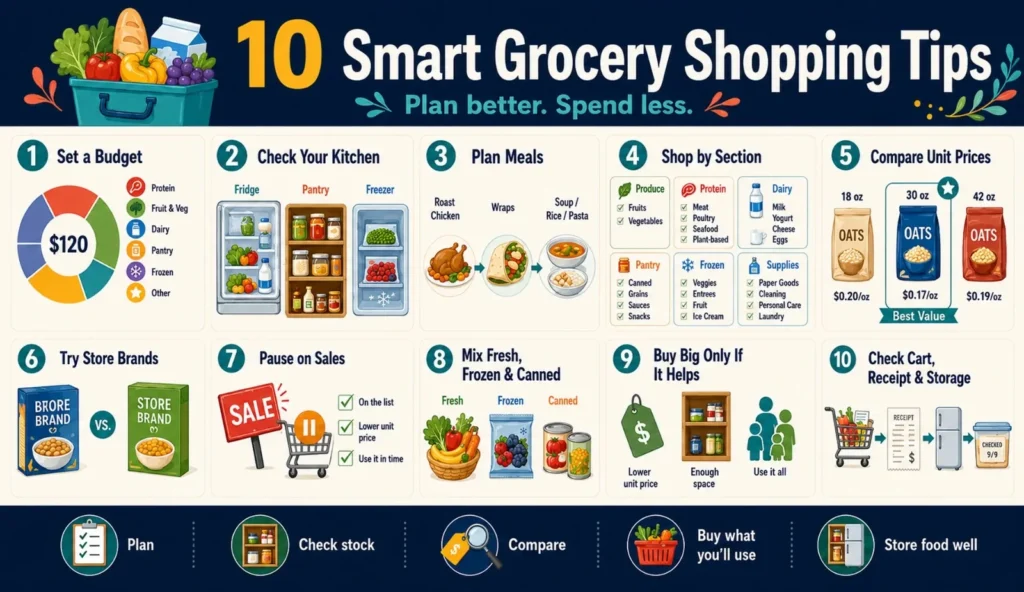
A $120 weekly food plan may look like this:
- $35 for meat, eggs, beans, and other protein foods
- $25 for fruit and vegetables
- $20 for milk, cheese, and yogurt
- $20 for rice, bread, pasta, and pantry food
- $10 for snacks
- $10 for price changes or small extra needs
Keep a small amount for price changes. Check the total each week. If one group costs more, move some money from another group.
2. Check the Kitchen First
Look in the fridge, freezer, and pantry before writing the list. Note open packs, low supplies, and food that may go bad soon.
A half bag of rice, three eggs, frozen peas, and one can of beans may help make two meals. This habit works well with tips for grocery shopping on a budget. It stops repeat buys and helps the home use older food first.
Check cooking oil, trash bags, foil, soap, and paper towels too. These items can take a big part of the budget when they all run out at once.
Keep a small list near the fridge. Add an item when it starts to run low.
3. Plan Meals With the Same Foods
Pick meals that use some of the same foods. Change the sauce, spice, or cooking style so each meal still feels new.
Roast chicken and vegetables can become wraps the next day. The last pieces can go into soup, rice, or pasta.
USDA SNAP-Ed says meal planning can help families save money and make balanced meals. A meal plan also shows how much food each recipe needs.
Plan:
- Four or five main meals
- Two easy lunches
- One simple backup meal
Use pantry or freezer food for the backup meal. This can stop a costly takeout order on a busy day.
4. Sort the List by Store Area
Put the list into simple store groups:
- Fruit and vegetables
- Meat and protein
- Milk and dairy
- Pantry food
- Frozen food
- Home supplies
For a paper list, use one page. Add boxes, amounts, and a small space for price notes. Print a few blank copies and keep them near the fridge.
A phone note works too. Add items during the week and place each one under the right group.
A sorted list saves time. Fewer aisles often mean fewer impulse buys.
5. Compare Unit Prices and Pack Sizes
The shelf price shows the full cost of a pack. The unit price shows the cost per ounce, pound, liter, or item.
A large pack does not always give the best deal. The saving goes away when food spoils or no one uses all the food.
| Product size | Shelf price | Unit price | Best choice |
| 18-ounce oats | $3.60 | $0.20 per ounce | Good for light use |
| 30-ounce oats | $5.10 | $0.17 per ounce | Best value in this example |
| 42-ounce oats | $7.98 | $0.19 per ounce | Good only for high use |
In this case, the 30-ounce pack costs less per ounce. Check the unit-price label before picking a product.
For canned food, compare the drained weight too. A can may look large but hold more water and less food.
A family of five may finish a large pack fast. One person may save more with a small pack. Finishing the food matters more than buying the largest size.
6. Try Store Brands Slowly
Store brands often cost less than big brands. They may work well for:
- Rice
- Flour
- Oats
- Canned vegetables
- Frozen fruit
- Spices
- Cleaning products
Compare the ingredients, food facts, pack size, and unit price. Do not judge a product only by its box.
Try one lower-cost item each week. Keep buying it when the taste and quality feel right.
Use coupons after finishing the list. A coupon does not always make an item cheaper.
A big-brand cereal may cost $5.00. A coupon may cut it to $4.25. A similar store-brand box may cost only $3.40 with no coupon.
7. Pause Before Buying Sale Items
A sale saves money only when the home needs the item and will use it. A “buy two, get one free” deal may raise the bill when one pack would be enough.
Before adding a sale item, ask:
- Is this item on the list?
- Does the final unit price cost less?
- Will the home eat or freeze the food in time?
- Would the item still feel useful without the sale sign?
These mindful grocery shopping tips add a short pause before each extra buy. That pause can stop impulse buys.
End displays often look like good deals. The normal shelf may have a cheaper choice.
8. Mix Fresh, Frozen, and Canned Food
Fresh fruit and vegetables taste good, but they do not always cost less. USDA guidance says food in season may offer better value. Frozen and canned food can also fit a small budget.
Use fresh food early in the week. Use frozen food later, when fresh food may start to spoil.
Frozen fruit and vegetables work well in:
- Soups
- Rice meals
- Pasta
- Smoothies
- Side dishes
Take out only the amount needed. Keep the rest in the freezer. Check the salt and sugar on canned food.
These grocery store shopping tips can cut waste too. Frozen and canned foods often last longer than fresh foods.
9. Buy Large Packs Only When They Help
A large pack may save money when:
- The unit price costs less.
- The home has enough space.
- The home can use all the food.
Rice, pasta, oats, beans, and some frozen foods often work well in large packs. Large packs of berries, bread, meat, or dairy may not suit a small home.
Split meat, bread, and cooked food into meal-size parts before freezing. Write the food name and date on each bag or box.
Clear labels make food easy to find. Count the cost of freezer bags too. Add that cost before calling a large pack a good deal.
Sharing a large pack with a family member can also help.
10. Check the Cart, Receipt, and Food Storage
Look through the cart before checkout. Remove repeat items and food with no meal plan. Also remove any product that a bright sign tempted you to buy.
Watch the checkout screen. Make sure each sale price and coupon shows up. Keep the receipt until someone checks the full bill.
A receipt can show:
- Price mistakes
- Changes in weekly spending
- High-cost food groups
- Common impulse buys
At home, put cold food away first. Move older food to the front. Put new food at the back.
Freeze bread, meat, and cooked meals in the amount needed for one meal. Use clear boxes and labels to keep the freezer neat.
A Simple Plan for the Next Grocery Trip
| Before the trip | In the store | After the trip |
| Check the pantry and freezer | Follow the list by section | Put cold food away first |
| Plan meals with shared foods | Compare unit prices | Label freezer packs |
| Set a spending limit | Pause before extra buys | Check the receipt |
| Check coupons last | Pick a size the home can finish | Track waste and total cost |
Keep each receipt for four weeks. Write down the planned amount, the final total, and any food that went into the trash.
This record may show that snacks, drinks, extra trips, large packs, or spoiled food cause the biggest losses.
Good grocery budget tips should make shopping easier. Start with two or three changes. Keep using them until they feel normal. Then add one more habit. Small steps can lower the grocery bill. They can also help the home waste less food, cook simple meals, and shop with less stress.