

 By
By Managing food for the first time feels tough. Early morning classes and long study hours keep people busy. Social lives also take up lots of time. Cooking often drops down on the priority list. Many people order takeout food or eat instant noodles every night. However, a basic routine for student meal plans keeps the process simple. It stays cheap and helps a lot.
A recent college dining study highlights home cooking. Preparing food in a kitchen cuts expenses. It gives complete control over ingredients. Learning meal planning for students saves cash. It reduces food waste. It also boosts daily energy during busy times.
A solid kitchen routine provides an excellent foundation for success. At Affordable Meal Plans, you will get clear tips and simplify the change for beginners.
Why Preparing Ahead Saves Your Semester
Taking control of a weekly food schedule changes everything. A clear strategy eliminates the stressful question of what to eat at 8:00 PM after exhausting classes.
Smart meal plan for college students habits bring huge benefits:
- Bulk grocery shopping prevents expensive daily trips to shops.
- Cooks manage the exact oil and salt in each meal.
- Big batches of food free up hours during exam weeks.
- Ready boxes in the fridge mean fewer choices after a long day.
The Simple 3-Step Strategy
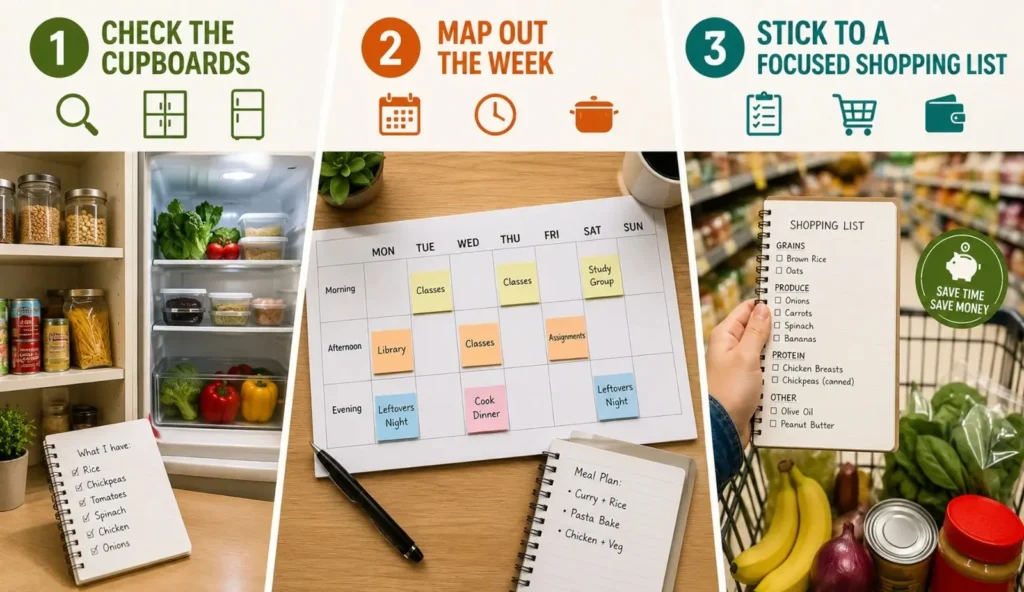
Nobody needs professional chef skills to make good food. Great meal plans for college students rely on simple steps. Anyone can use this basic guide to start now.
1. Check the Cupboards
Look inside the cabinets and fridge before shopping. Designing dishes around items on the shelves keeps costs low. This habit stops good food from rotting.
2. Map Out the Week
Look at the school calendar to find the busiest days. Mark the times with late study groups. Eat easy leftovers on those nights. Schedule cooking blocks for days with fewer classes.
3. Stick to a Focused Shopping List
Always carry a shopping list into the grocery store. Group items by section to walk through aisles fast. A precise list protects the wallet from bad snack choices.
Smart Shopping on a Student Budget
The secret to a cheap meal plan for students’ routine lies in basic food items. These foods form the core of many different cheap dishes.
| Pantry Staples | Fresh Produce | Freezer Essentials |
| Brown Rice | Yellow Onions | Frozen Spinach |
| Wholemeal Pasta | Carrots | Mixed Berries |
| Canned Chickpeas | Bananas | Frozen Peas |
| Rolled Oats | Sweet Potatoes | Chicken Breasts |
Keep these portion choices and buying strategies in mind during shopping trips:
- Buy Grains in Bulk: Large bags of rice or oats cost very little. They stay fresh for months.
- Utilize the Freezer: Frozen vegetables pack great nutrients. They cost less than fresh items. They never rot in three days.
- Embrace Canned Pulses: Canned beans provide cheap protein with zero cooking time.
A Sample 3-Day Menu Plan
This easy three-day plan shows how the process works. It uses the same ingredients to keep work low.
Day 1
- Breakfast: Peanut butter oatmeal with half a banana.
- Lunch: A wrap with chicken, spinach, and hummus.
- Dinner: A vegetable curry with rice.
Day 2
- Breakfast: Two eggs on toast.
- Lunch: Leftover curry from the first night.
- Dinner: A quick pasta bake with tomatoes, spinach, and cheese.
Day 3
- Breakfast: Peanut butter oatmeal with berries.
- Lunch: Leftover pasta bake.
- Dinner: Chicken with sweet potatoes and broccoli.
Clear Nutrition Profiles
Understanding food keeps the brain sharp. Nobody needs complex apps to eat healthy meals. Focus on a clean balance of carbs, proteins, and fats.
| Dish Name | Typical Portion Size | Calories | Protein | Carbs | Fat |
| Peanut Butter Oats | 1 bowl (50g oats, 1 tbsp PB) | 320 kcal | 11g | 42g | 12g |
| Chicken Spinach Wrap | 1 large wrap (60g chicken) | 380 kcal | 24g | 35g | 14g |
| Veggie Chickpea Curry | 1 large plate (with rice) | 450 kcal | 14g | 68g | 9g |
| Easy Pasta Bake | 1 medium serving bowl | 410 kcal | 16g | 55g | 13g |
5 Practical Prep Tips for Success
Organizing a meal plan for uni students’ routines goes smoothly with short kitchen tasks:
- Batch Cook Grains: Cook a large pot of rice on Sunday. Use it as a fast base all week.
- Invest in Good Boxes: Use airtight containers to keep food fresh.
- Pre-Chop Vegetables: Slice onions and carrots right after shopping. This cuts cooking time in half.
- Mix Up Sauces: Prevent boredom by rotating hot sauce and pesto.
- Repurpose Leftovers: Use extra dinner chicken for lunch wraps the next morning.
Student Meal Planning Calculator
This quick tool helps determine daily caloric needs and estimates weekly grocery costs based on individual habits.
Fueling Academic Goals
Eating well during college requires consistency. It does not require absolute perfection. Occasional pizza nights with friends matter very little. The true goal centers on building reliable habits. Starting small and using a clear list protects health and money. Turn these simple steps into a regular routine. Enjoy a healthy, active, and stress-free school year.
To tailor this setup further, please share:
- The specific weekly grocery budget limit
- Any necessary dietary restrictions (such as dairy-free or vegetarian)
- The available cooking appliances in the room (like a microwave or air fryer)
Providing these details allows the creation of a highly personalized shopping checklist for Student Meal Plans!Managing food for the first time feels tough. Early morning classes and long study hours keep people busy. Social lives also take up lots of time. Cooking often drops down on the priority list. Many people order takeout food or eat instant noodles every night. However, a basic routine for student meal plans keeps the process simple. It stays cheap and helps a lot.
A recent college dining study highlights home cooking. Preparing food in a kitchen cuts expenses. It gives complete control over ingredients. Learning meal planning for students saves cash. It reduces food waste. It also boosts daily energy during busy times.
A solid kitchen routine provides an excellent foundation for success. At Affordable Meal Plans, you will get clear tips and simplify the change for beginners.
Why Preparing Ahead Saves Your Semester
Taking control of a weekly food schedule changes everything. A clear strategy eliminates the stressful question of what to eat at 8:00 PM after exhausting classes.
Smart meal plan for college students habits bring huge benefits:
- Bulk grocery shopping prevents expensive daily trips to shops.
- Cooks manage the exact oil and salt in each meal.
- Big batches of food free up hours during exam weeks.
- Ready boxes in the fridge mean fewer choices after a long day.
The Simple 3-Step Strategy
Nobody needs professional chef skills to make good food. Great meal plans for college students rely on simple steps. Anyone can use this basic guide to start now.
1. Check the Cupboards
Look inside the cabinets and fridge before shopping. Designing dishes around items on the shelves keeps costs low. This habit stops good food from rotting.
2. Map Out the Week
Look at the school calendar to find the busiest days. Mark the times with late study groups. Eat easy leftovers on those nights. Schedule cooking blocks for days with fewer classes.
3. Stick to a Focused Shopping List
Always carry a shopping list into the grocery store. Group items by section to walk through aisles fast. A precise list protects the wallet from bad snack choices.
Smart Shopping on a Student Budget
The secret to a cheap meal plan for students’ routine lies in basic food items. These foods form the core of many different cheap dishes.
| Pantry Staples | Fresh Produce | Freezer Essentials |
| Brown Rice | Yellow Onions | Frozen Spinach |
| Wholemeal Pasta | Carrots | Mixed Berries |
| Canned Chickpeas | Bananas | Frozen Peas |
| Rolled Oats | Sweet Potatoes | Chicken Breasts |
Keep these portion choices and buying strategies in mind during shopping trips:
- Buy Grains in Bulk: Large bags of rice or oats cost very little. They stay fresh for months.
- Utilize the Freezer: Frozen vegetables pack great nutrients. They cost less than fresh items. They never rot in three days.
- Embrace Canned Pulses: Canned beans provide cheap protein with zero cooking time.
A Sample 3-Day Menu Plan
This easy three-day plan shows how the process works. It uses the same ingredients to keep work low.
Day 1
- Breakfast: Peanut butter oatmeal with half a banana.
- Lunch: A wrap with chicken, spinach, and hummus.
- Dinner: A vegetable curry with rice.
Day 2
- Breakfast: Two eggs on toast.
- Lunch: Leftover curry from the first night.
- Dinner: A quick pasta bake with tomatoes, spinach, and cheese.
Day 3
- Breakfast: Peanut butter oatmeal with berries.
- Lunch: Leftover pasta bake.
- Dinner: Chicken with sweet potatoes and broccoli.
Clear Nutrition Profiles
Understanding food keeps the brain sharp. Nobody needs complex apps to eat healthy meals. Focus on a clean balance of carbs, proteins, and fats.
| Dish Name | Typical Portion Size | Calories | Protein | Carbs | Fat |
| Peanut Butter Oats | 1 bowl (50g oats, 1 tbsp PB) | 320 kcal | 11g | 42g | 12g |
| Chicken Spinach Wrap | 1 large wrap (60g chicken) | 380 kcal | 24g | 35g | 14g |
| Veggie Chickpea Curry | 1 large plate (with rice) | 450 kcal | 14g | 68g | 9g |
| Easy Pasta Bake | 1 medium serving bowl | 410 kcal | 16g | 55g | 13g |
5 Practical Prep Tips for Success
Organizing a meal plan for uni students’ routines goes smoothly with short kitchen tasks:
- Batch Cook Grains: Cook a large pot of rice on Sunday. Use it as a fast base all week.
- Invest in Good Boxes: Use airtight containers to keep food fresh.
- Pre-Chop Vegetables: Slice onions and carrots right after shopping. This cuts cooking time in half.
- Mix Up Sauces: Prevent boredom by rotating hot sauce and pesto.
- Repurpose Leftovers: Use extra dinner chicken for lunch wraps the next morning.
Student Meal Planning Calculator
This quick tool helps determine daily caloric needs and estimates weekly grocery costs based on individual habits.
Place the Calculator Here
Fueling Academic Goals
Eating well during college requires consistency. It does not require absolute perfection. Occasional pizza nights with friends matter very little. The true goal centers on building reliable habits. Starting small and using a clear list protects health and money. Turn these simple steps into a regular routine. Enjoy a healthy, active, and stress-free school year.
To tailor this setup further, please share:
- The specific weekly grocery budget limit
- Any necessary dietary restrictions (such as dairy-free or vegetarian)
- The available cooking appliances in the room (like a microwave or air fryer)
Providing these details allows the creation of a highly personalized shopping checklist for Student Meal Plans!